
Financial freedom is a goal that many people aspire to achieve. While the concept may mean different things to different individuals, it generally refers to having enough financial resources to live comfortably without constantly worrying about money.
Achieving financial freedom does not necessarily require becoming extremely wealthy. Instead, it involves developing healthy financial habits, managing debt responsibly, saving consistently, and making smart long-term decisions.
Whether you’re just beginning your financial journey or looking to improve your current situation, understanding the principles of financial freedom can help you create a more secure and fulfilling future.
What Is Financial Freedom?
Financial freedom means having enough income, savings, and investments to cover your living expenses and support the lifestyle you desire.
People who achieve financial freedom often experience:
- Reduced financial stress
- Greater flexibility in career choices
- Improved quality of life
- Increased confidence about the future
- More opportunities to pursue personal goals
Financial freedom is not about perfection. It’s about gaining control over your money rather than allowing money to control you.
Why Financial Freedom Matters
Money affects nearly every aspect of life.
Building financial independence provides benefits such as:
- Greater peace of mind
- The ability to handle emergencies
- More flexibility and choices
- Reduced dependence on debt
- Improved retirement security
Financial stability creates a foundation that allows individuals to focus on relationships, health, and personal growth.
Step 1: Create a Clear Financial Plan
Every successful journey begins with a plan.
Ask yourself:
- How much do I want to save?
- What are my short-term goals?
- What are my long-term goals?
- What lifestyle do I want to maintain?
Examples of financial goals include:
- Building an emergency fund
- Paying off debt
- Buying a home
- Investing for retirement
- Starting a business
Having clear goals provides motivation and direction.
Step 2: Build an Emergency Fund

Unexpected expenses are inevitable.
Medical bills, car repairs, or job loss can quickly disrupt your finances.
Most financial experts recommend saving three to six months of essential living expenses.
Even starting with:
- $500
- $1,000
- One month of expenses
can provide valuable financial protection.
Emergency savings create stability and prevent reliance on high-interest debt.
Step 3: Eliminate High-Interest Debt
Debt can significantly delay financial progress.
Prioritize paying off:
- Credit card balances
- Personal loans
- High-interest debt
Strategies such as the debt snowball method and debt avalanche method can help accelerate repayment.
Reducing debt frees up more money for saving and investing.
Step 4: Create and Follow a Budget
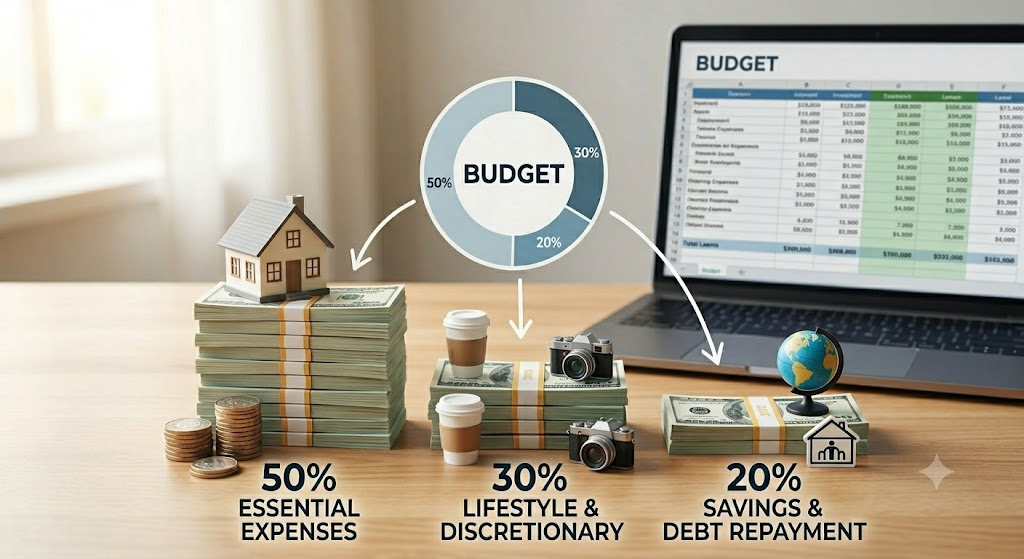
Budgeting helps you understand where your money goes.
A simple approach is the 50/30/20 rule:
50%
Essential expenses
30%
Lifestyle and discretionary spending
20%
Savings and debt repayment
Tracking your spending allows you to make better financial decisions.
Step 5: Save Consistently
Consistency matters more than perfection.
Develop the habit of saving regularly.
Ways to increase savings include:
- Automating transfers
- Reducing unnecessary expenses
- Saving windfalls and bonuses
- Increasing your income
Small contributions made consistently can produce remarkable results over time.
Step 6: Start Investing Early
Investing allows your money to grow through compound returns.
Common investment options include:
- Index funds
- Mutual funds
- Stocks
- Bonds
- Real estate
Starting early provides more time for compound growth to work in your favor.
Even modest investments can accumulate significantly over decades.
Step 7: Increase Your Income
While reducing expenses is important, increasing income can accelerate financial freedom.
Potential ways to increase earnings include:
- Freelancing
- Side businesses
- Online consulting
- Part-time work
- Developing valuable skills
Growing income creates additional opportunities to save and invest.
Common Mistakes That Delay Financial Freedom
Living Beyond Your Means
Overspending can prevent long-term progress.
Ignoring Debt
High-interest debt can consume a large portion of your income.
Not Investing Early
Delaying investments means losing valuable time for compound growth.
Lacking Financial Goals
Without clear objectives, it becomes difficult to stay motivated.
Failing to Build an Emergency Fund
Unexpected expenses can derail even the best financial plans.
The Psychological Benefits of Financial Freedom
Financial independence offers more than monetary rewards.
People with strong financial foundations often experience:
- Lower stress levels
- Greater confidence
- Improved relationships
- Better mental health
- Increased life satisfaction
Money itself does not guarantee happiness, but financial stability can provide peace of mind and flexibility.
Final Thoughts

Building financial freedom is a long-term process that requires patience, discipline, and consistency.
There is no overnight solution. However, by creating a plan, managing debt responsibly, building emergency savings, investing regularly, and maintaining healthy financial habits, anyone can make meaningful progress toward greater financial independence.
Remember that financial freedom is not about becoming rich overnight. It’s about creating a life where money supports your goals rather than limiting your choices.
Key Takeaways
- Financial freedom means gaining control over your finances.
- Building an emergency fund should be a top priority.
- Eliminating high-interest debt accelerates progress.
- Budgeting helps you manage money effectively.
- Investing early allows compound growth to work over time.
- Increasing income can speed up wealth-building.
- Consistency is more important than perfection.
Frequently Asked Questions
What is financial freedom?
Financial freedom means having enough income, savings, and investments to support your lifestyle without constant financial stress.
How much money do I need to achieve financial freedom?
The amount varies depending on your lifestyle and financial goals. Many experts focus on expenses rather than income alone.
Should I pay off debt before investing?
High-interest debt should generally be prioritized, while still maintaining emergency savings.
Can I achieve financial freedom on a modest income?
Yes. Consistent saving, budgeting, and investing can lead to financial independence over time.
Why is starting early important?
Starting early allows compound growth to maximize long-term wealth accumulation.
Related Articles
- Emergency Funds: Why You Need One and How to Build It
- Debt Management Strategies: How to Pay Off Debt Faster
- How to Create a Monthly Budget That Actually Works
- 10 Smart Ways to Save More Money Every Month
- Compound Interest Explained: Why Time Matters
About the Author
Daniel Hart
Daniel Hart is a personal finance writer at ViralStoryHub24. He specializes in budgeting, saving strategies, and practical financial education designed to help readers achieve long-term financial security and independence.