
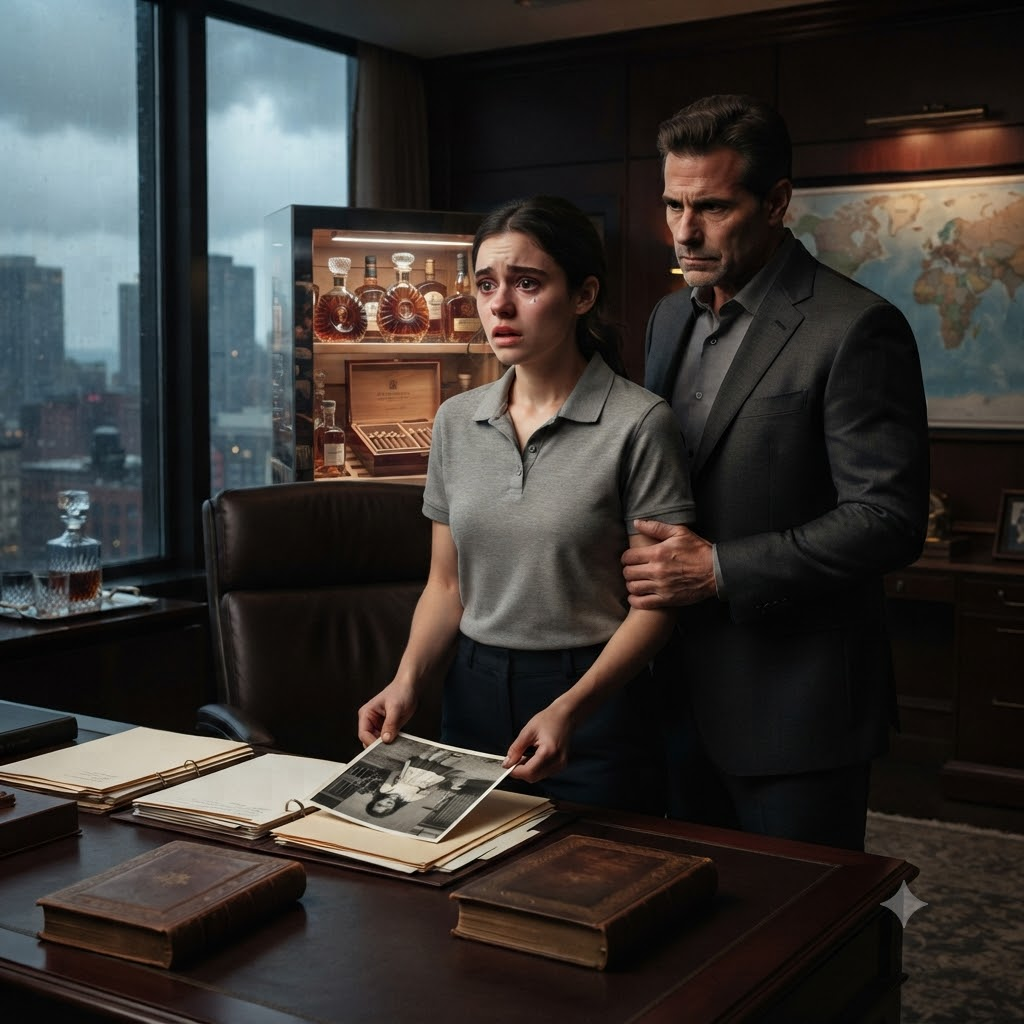
I dropped the photo as if it had burned my fingertips. It clattered against the mahogany shelf, face down once more, leaving me gasping for air in the sudden silence of the room. How was this possible? My grandmother had raised me in a cramped walk-up in Brooklyn after our parents died. She had never been to Italy. I had never been anywhere but the boroughs of New York and the suburbs of Illinois. I reached for the edge of the desk to steady myself, my heart hammering against my ribs like a trapped bird.
The door clicked shut behind me.
I spun around. Dominic leaned against the doorframe, his arms crossed, his dark gaze piercing through the pretense I had been trying to maintain all day. He didn’t look like a mobster anymore; he looked like a man haunted.
“You found it,” he said, his voice flat, devoid of its usual sharp authority.
“Who is she?” I demanded, my voice trembling despite my best efforts to keep it steady. “Why do I look like her? This is some kind of sick joke, isn’t it?”
Dominic moved into the room, his footsteps silent on the thick Persian rug. He didn’t stop until he was inches from me, close enough that I could smell the faint scent of sandalwood and something sharper—gunpowder, perhaps, or just the stale residue of a life lived in the shadows. He reached out, his hand hovering near my face, but he didn’t touch me. He seemed to be fighting an internal war, a battle between the man he was forced to be and the man he had once dreamed of becoming.
“Her name was Elena,” he whispered. “She was my cousin. She died twenty years ago, the night I was initiated into the life I can never leave. That song you sang? She used to sing it to me when we were children, hiding in the cellars of our grandfather’s estate in Sicily while the men upstairs decided who would live and who would die.”
I felt a phantom ache in my chest, a memory that wasn’t mine surfacing like a bubble in deep water. “I don’t understand,” I stammered. “My grandmother… she came to America alone. She never mentioned a brother. She never mentioned Sicily.”
“Your grandmother, Sofia, didn’t come to America alone, Lily,” Dominic said, his eyes darkening with a grief that seemed etched into his very soul. “She came here with a secret she was paid to keep until her dying breath. And the secret wasn’t just about the past. It was about you.”
He turned to the desk and pulled a hidden drawer open, revealing a stack of documents—birth certificates, bank records, and a letter sealed in yellowing wax. He didn’t give them to me. He laid them out, letting me see the name on the documents. It wasn’t my name.
It was Elena’s.
“You aren’t a cleaner, Lily. You aren’t a poor girl from Brooklyn struggling to pay rent for a brother who, by the way, isn’t related to you by blood at all.”
The world tilted. “That’s a lie. Noah is my brother.”
“Noah is the son of the man who killed Elena,” Dominic countered, his voice hardening. “When the dust settled, your grandmother, who was the nursemaid to both families, took you—the only living link to the bloodline that the Syndicate wanted erased—and she took him, the child of your enemy, as a penance. She kept you both hidden in plain sight, hoping that if you lived as a nobody, you would live long enough to survive.”
I felt the walls closing in. The security cameras, the guards, the constant hum of fear that followed me—it wasn’t just my life; it was a prison. I had been living a lie, a carefully constructed narrative written by a woman who loved me enough to bury my identity to save my life. But the truth, I realized, was always going to catch up.
“Why tell me now?” I asked, my voice barely a whisper. “If I was safe, if I was hidden… why break the illusion?”
Dominic finally looked away, his gaze drifting to the window, toward the vast, grey expanse of the lake. “Because the people who ordered Elena’s death are back, Lily. They found the thread. They found the song. And they’re coming for the girl who sings it.”
I looked at my hands—the hands that scrubbed floors, the hands that carried grocery bags, the hands that had been invisible for twenty-four years. They were shaking. I realized then that I had never been invisible because of who I was; I had been invisible because I was a target in a game I didn’t know I was playing.
“What do I do?” I asked, the defiance draining out of me, replaced by a cold, sharp clarity.
Dominic walked to the wall behind his desk and pressed a hidden mechanism. A heavy steel door slid open, revealing an armory that looked like a bunker—weapons, tactical gear, and a passport with my photograph, but a different name and a different life waiting on the other side of the world.
“You have two choices,” he said, turning to face me one last time. “You can walk out that door, go back to your apartment, and hope that your anonymity holds for one more night, or you can pick up a weapon and help me finish the war that started in a Sicilian cellar twenty years ago.”
I looked at the passport. Then I looked at the photograph of the girl who looked like me, the girl who had been murdered for a past she didn’t choose. I thought of Noah—the boy I had protected, the boy who, in a twist of cruel irony, was the son of my tormentor. I realized then that my grandmother hadn’t just saved me; she had trapped me in a cycle of protection that had finally run its course.
I reached out, my fingers brushing the cold metal of a handgun resting on the table. It felt heavy, dangerous, and for the first time in my life, it felt like my own.
“I don’t want to run anymore,” I said, my voice steadying, shedding the timid skin of the girl who cleaned windows.
Dominic’s expression didn’t change, but his eyes softened. He walked over and handed me the photograph of the girl in the fountain. “She was strong, Lily. Stronger than they ever gave her credit for. And you are her blood.”
I tucked the photo into my pocket and took the gun. Outside, the sirens began to wail—a rhythmic, haunting sound that signaled the beginning of the end. We stood in the center of the penthouse, the hunter and the ghost, ready to face the shadows that had finally come into the light. I didn’t know if I would survive the night, or if the name on my passport would be the only thing left of me, but as I looked at the man who had been my employer and was now my only ally, I realized that the lullaby hadn’t been a memory of a lost life. It had been a warning. And finally, I was ready to sing it.
The woman in the photograph was me. Or, at least, it was a woman who looked so much like me that I felt the floor beneath my feet dissolve into thin air. She was younger, perhaps in her late teens, standing in front of a stone fountain in a courtyard that looked nothing like the steel and glass architecture of Chicago. She was wearing a simple, embroidered dress, her dark hair pulled back with a ribbon, and she was laughing—a genuine, unburdened sound that I had never been lucky enough to produce in my own life.
I dropped the photo as if it had burned my fingertips. It clattered against the mahogany shelf, face down once more, leaving me gasping for air in the sudden silence of the room. How was this possible? My grandmother had raised me in a cramped walk-up in Brooklyn after our parents died. She had never been to Italy. I had never been anywhere but the boroughs of New York and the suburbs of Illinois. I reached for the edge of the desk to steady myself, my heart hammering against my ribs like a trapped bird.
The door clicked shut behind me.
I spun around. Dominic leaned against the doorframe, his arms crossed, his dark gaze piercing through the pretense I had been trying to maintain all day. He didn’t look like a mobster anymore; he looked like a man haunted.
“You found it,” he said, his voice flat, devoid of its usual sharp authority.
“Who is she?” I demanded, my voice trembling despite my best efforts to keep it steady. “Why do I look like her? This is some kind of sick joke, isn’t it?”
Dominic moved into the room, his footsteps silent on the thick Persian rug. He didn’t stop until he was inches from me, close enough that I could smell the faint scent of sandalwood and something sharper—gunpowder, perhaps, or just the stale residue of a life lived in the shadows. He reached out, his hand hovering near my face, but he didn’t touch me. He seemed to be fighting an internal war, a battle between the man he was forced to be and the man he had once dreamed of becoming.
“Her name was Elena,” he whispered. “She was my cousin. She died twenty years ago, the night I was initiated into the life I can never leave. That song you sang? She used to sing it to me when we were children, hiding in the cellars of our grandfather’s estate in Sicily while the men upstairs decided who would live and who would die.”
I felt a phantom ache in my chest, a memory that wasn’t mine surfacing like a bubble in deep water. “I don’t understand,” I stammered. “My grandmother… she came to America alone. She never mentioned a brother. She never mentioned Sicily.”
“Your grandmother, Sofia, didn’t come to America alone, Lily,” Dominic said, his eyes darkening with a grief that seemed etched into his very soul. “She came here with a secret she was paid to keep until her dying breath. And the secret wasn’t just about the past. It was about you.”
He turned to the desk and pulled a hidden drawer open, revealing a stack of documents—birth certificates, bank records, and a letter sealed in yellowing wax. He didn’t give them to me. He laid them out, letting me see the name on the documents. It wasn’t my name.
It was Elena’s.
“You aren’t a cleaner, Lily. You aren’t a poor girl from Brooklyn struggling to pay rent for a brother who, by the way, isn’t related to you by blood at all.”
The world tilted. “That’s a lie. Noah is my brother.”
“Noah is the son of the man who killed Elena,” Dominic countered, his voice hardening. “When the dust settled, your grandmother, who was the nursemaid to both families, took you—the only living link to the bloodline that the Syndicate wanted erased—and she took him, the child of your enemy, as a penance. She kept you both hidden in plain sight, hoping that if you lived as a nobody, you would live long enough to survive.”
I felt the walls closing in. The security cameras, the guards, the constant hum of fear that followed me—it wasn’t just my life; it was a prison. I had been living a lie, a carefully constructed narrative written by a woman who loved me enough to bury my identity to save my life. But the truth, I realized, was always going to catch up.
“Why tell me now?” I asked, my voice barely a whisper. “If I was safe, if I was hidden… why break the illusion?”
Dominic finally looked away, his gaze drifting to the window, toward the vast, grey expanse of the lake. “Because the people who ordered Elena’s death are back, Lily. They found the thread. They found the song. And they’re coming for the girl who sings it.”
I looked at my hands—the hands that scrubbed floors, the hands that carried grocery bags, the hands that had been invisible for twenty-four years. They were shaking. I realized then that I had never been invisible because of who I was; I had been invisible because I was a target in a game I didn’t know I was playing.
“What do I do?” I asked, the defiance draining out of me, replaced by a cold, sharp clarity.
Dominic walked to the wall behind his desk and pressed a hidden mechanism. A heavy steel door slid open, revealing an armory that looked like a bunker—weapons, tactical gear, and a passport with my photograph, but a different name and a different life waiting on the other side of the world.
“You have two choices,” he said, turning to face me one last time. “You can walk out that door, go back to your apartment, and hope that your anonymity holds for one more night, or you can pick up a weapon and help me finish the war that started in a Sicilian cellar twenty years ago.”
I looked at the passport. Then I looked at the photograph of the girl who looked like me, the girl who had been murdered for a past she didn’t choose. I thought of Noah—the boy I had protected, the boy who, in a twist of cruel irony, was the son of my tormentor. I realized then that my grandmother hadn’t just saved me; she had trapped me in a cycle of protection that had finally run its course.
I reached out, my fingers brushing the cold metal of a handgun resting on the table. It felt heavy, dangerous, and for the first time in my life, it felt like my own.
“I don’t want to run anymore,” I said, my voice steadying, shedding the timid skin of the girl who cleaned windows.
Dominic’s expression didn’t change, but his eyes softened. He walked over and handed me the photograph of the girl in the fountain. “She was strong, Lily. Stronger than they ever gave her credit for. And you are her blood.”
I tucked the photo into my pocket and took the gun. Outside, the sirens began to wail—a rhythmic, haunting sound that signaled the beginning of the end. We stood in the center of the penthouse, the hunter and the ghost, ready to face the shadows that had finally come into the light. I didn’t know if I would survive the night, or if the name on my passport would be the only thing left of me, but as I looked at the man who had been my employer and was now my only ally, I realized that the lullaby hadn’t been a memory of a lost life. It had been a warning. And finally, I was ready to sing it.